
Four of Our Favorite Fall Francophone Travel Destinations
October 23, 2024
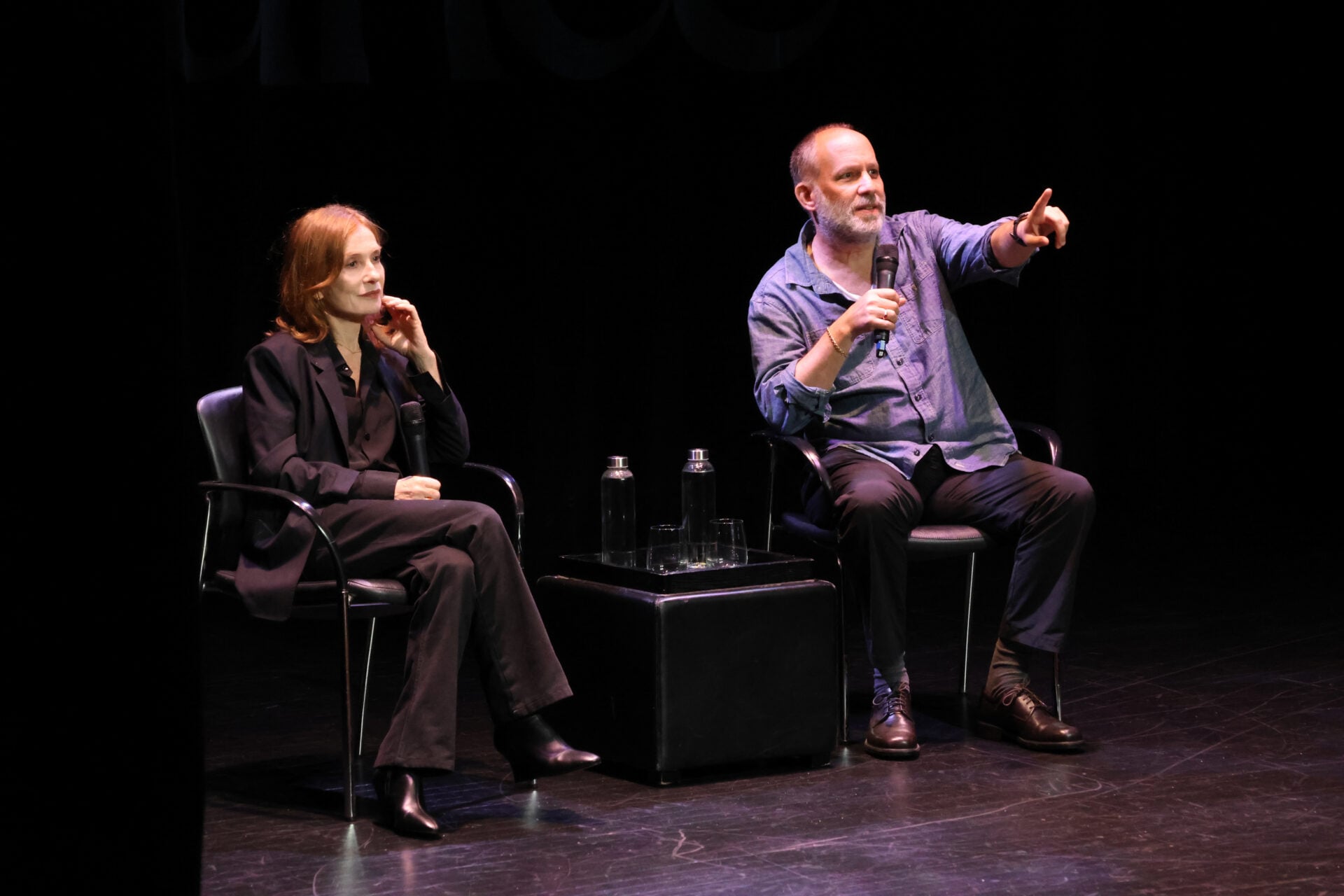
A conversation between Isabelle Huppert and Ira Sachs. L’Alliance New York, July 21, 2026
In French, a swindle is une escroquerie. Although Chabrol’s French title for his movie was Rien ne va plus, ‘no more bets,’ as they say in a casino.
Edited by JC Agid
Photography: Amelie Sultan
French actress Isabelle Huppert is no stranger to L’Alliance New York. A 2003 Trophée des Arts honoree, she is a regular presence on L’Alliance Florence Gould stage. Last year, she read Maupassant. ‘Sublime’ recalled a woman in the audience last evening as Huppert sat for a conversation with movie director Ira Sachs (whose film The Man I Love was in official competition at this year’s Cannes Film Festival) after the screening of Claude Chabrol’s The Swindle, a crime comedy, featuring Huppert, Michel Serrault and François Cluzet, a 2013 Trophée des Arts honoree.
From June 16 to July 28, 2026, L’Alliance New York programmed a Chabrol & Huppert series called Doing Wrong, showing six of the seven films that brought together Chabrol (1930-2010) and Huppert. “This collaboration spans nearly 40 years,” explained L’Alliance New York’s cinema director Jake Perlin. “Huppert’s striking beauty, chilly demeanor, and uncanny ability to inhabit every character she portrays proved a perfect fit for Chabrol’s stylish, methodical, slow-burn thrillers. Huppert and Chabrol infuse their thorny characters with humanity, revealing victims of circumstance and time; ‘I have a knack for doing wrong,’ one of them confesses, and the line doubles as a kind of artistic credo,” Perlin wrote.
To learn more about the series, click here: https://lallianceny.org/event/chabrol-huppert-doing-wrong/
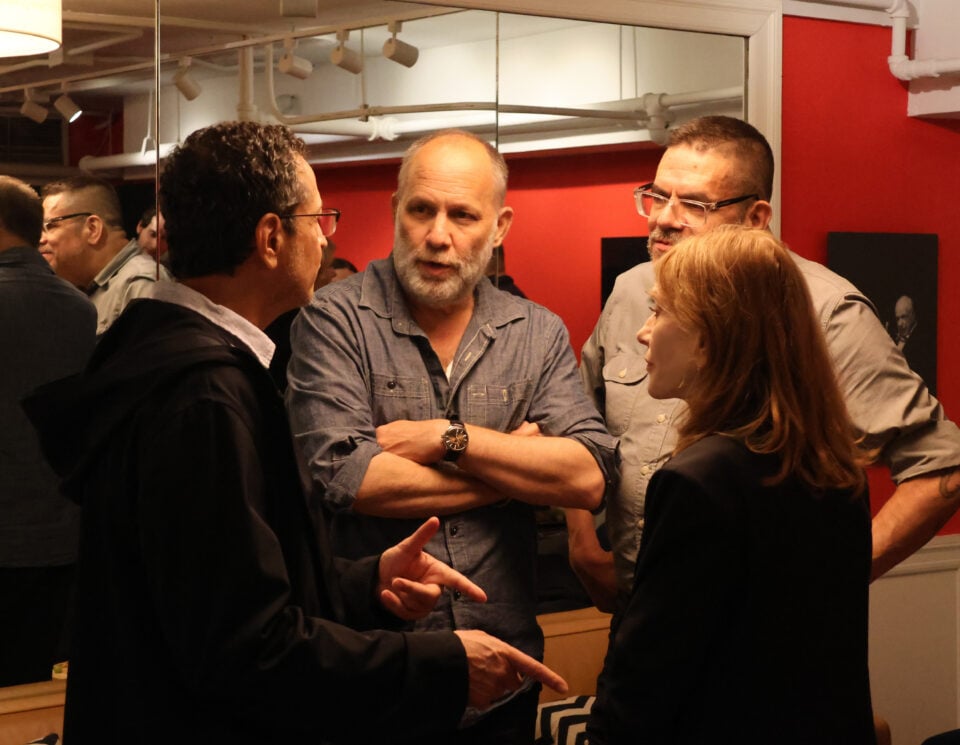
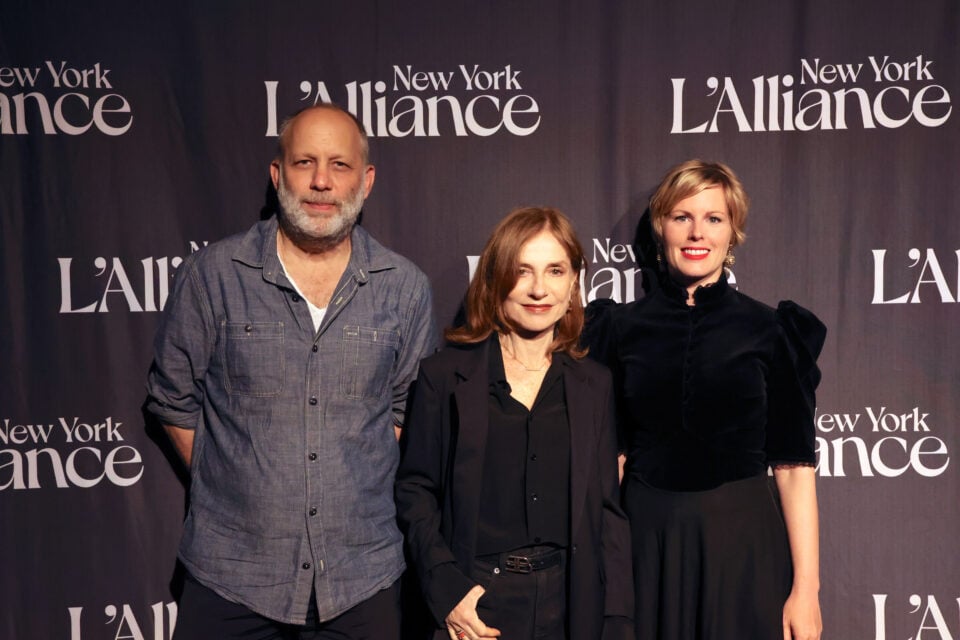
Following is an edited excerpt of Huppert’s 30-minute conversation with Ira Sachs at L’Alliance New York on July 21, 2026.
Ira Sachs: This is a celebration of this film, but also of the whole series of films. Watching this movie feels extremely personal in terms of that relationship. What is the relationship between Michel Serrault’s character and your character in the film? There is also a relationship between the director and the actor.
Isabelle Huppert: Claude Chabrol always wanted to make a biographical film, and very rarely have I seen someone carry an entire film by himself. Usually, you need a screenwriter and other collaborators. It struck me when I saw that this movie was both directed and written by Claude Chabrol. I think it is a very personal movie.
He saw the relationship between the director and the actors as a team of people trying to make the movie work. It’s not that we are manipulating people, but in a way we are. We tell stories and make people believe they are true.
Ira Sachs: This film was made 25 years after your first film with Claude Chabrol. How was it when you first met him? What was that like?
Isabelle Huppert: I don’t remember exactly when I met him for the first time. I think it was at an airport. At the time, the idea of making Violette was already underway, so we met shortly after that.
Ira Sachs: Do you think there is a Chabrol style for you as an actress? Specifically, part of the process is figuring out what type of direction you want so I am wondering if there is something in the work you did together that felt particular?
Isabelle Huppert: What was particular is that Chabrol was a really great director. The way he directed and staged a film made everything very easy for the actors. He never gave directions. I remember only one occasion when he did, and I was very surprised because that simply wasn’t his style.
His vision was so strong that everything happened easily. Everything was driven by the mise-en-scène. It felt like a miracle. I don’t really know how to explain it.
Before shooting, he might say a few things that I would hold onto, but after that the making of the film spoke for itself. I remember that, during a specific scene, he said something like, “You did it this way, but I would like you to do it differently,” and I was so surprised because it was so unlike him.
Ira Sachs: This film has a very original tone; it builds between tragedy and comedy. There is a particular scene toward the end where you discover the body. It’s a fantastic play, a really beautiful performance, and it feels quite different from the rest of the film. When you were shooting it, did you know it would become such a special moment?
Isabelle Huppert: Yes, I knew. It’s hard to tell when you do a movie. Sometimes the tiny moments become the most important, and the big scenes turn out not to be. With Chabrol, filming was so easy all the time that we didn’t feel one moment was more important than another. It is strange.
Ira Sachs: With Michel Serrault, you are a pair in the film, but your characters are also very different. The tone is different. Could you talk about working with him?
Isabelle Huppert: Michel Serrault was a very famous actor and had a reputation for not being very approachable. In fact, we had a wonderful relationship. We got along very well, and he was very nice. He wasn’t someone you felt at ease with at first, but it turned into a great collaboration. He was a great actor. There was something dark beneath the surface, something undefined. He could not be reduced to being a comedy actor. You could feel that there were several dimensions to him.
Ira Sachs: I’m wondering if a film like that was important to Chabrol.
Isabelle Huppert: I think Chabrol was a bon vivant. He would choose filming locations partly because of the good restaurants and good food. He was mysterious and he was not easily readable. I think he liked creating these situations and making these films because he wanted to be understood and deciphered. On the surface everything seemed easy, but there was always something much more ambiguous in his films.
Ira Sachs: Was there a time when directors were watching each other’s work? Were they concerned with one another or was each one in his own world?
Isabelle Huppert: I’m not sure. Perhaps at the beginning of the new wave, there was a great sense of complicity at the beginning. By the time I knew them, the connection between them was much less obvious. I don’t think there was the same complicity anymore. For example, Godard and Chabrol were at the source of something very important in French cinema, but eventually their paths diverged from one another. In fact, their movies were very different, all of them remained so wonderful, so smart and most of the time critical, sometimes political but in very different ways.
Ira Sachs: They were making movies in the 1990s. There are still certain things that overlap beyond their differences: the way they filmed, the lighting, and a certain kind of acting that connected them.
Isabelle Huppert: At the beginning of the 1980s, Godard was saying that it was a new era for him. It was his “second first” beginning. He reinvented himself by making much more political films and less a classical storytelling.
Chabrol made many, many films and he was completely aware that there were ups and downs in his movies. He wrote Et pourtant je tourne (And Yet I Shoot), which reflects the idea that, no matter what, he always wanted to continue making films. He knew that some films were better than others, but he kept working, nonetheless.
Ira Sachs: Fassbinder had a great quote and said, “I would fix it in the next time.” I am curious if you would describe your relationship with Chabrol as intimate?
Isabelle Huppert: Intimate? I never had intimate relationships with any of my directors! The relationship between an actor and a director is more than intimate; it means going to his psyche, to his emotions.
To keep it so precious, you do not want to go too far in real life into this relationship. You have to maintain a certain formality almost.
With Chabrol, we did seven movies together, but we were never friends. Also, because we knew that no matter what, we were going to do another film and another film together.