Jean-Pierre Gorin (b. 1943) is a filmmaker, film theorist, and professor emeritus at the University of California, San Diego. Educated at the illustrious Lycée Louis-le-Grand in Paris, Gorin came of age in the 1960s as a radical Maoist steeped in new modes of critical theory. With Jean-Luc Godard he formed the Dziga Vertov Group, a revolutionary filmmaking collective whose work including Wind from the East (1969), Struggle in Italy (1970), and Vladimir and Rosa (1971), sought to depict an internationalist movement of students, workers and freedom fighters, deconstructing conventional cinematic grammar in order to recalibrate the politics of image-sound relationships. Gorin offered political and theoretical guidance that ignited what he referred to as “the revolutionary potential in aesthetics that Jean-Luc brought to his previous films.”
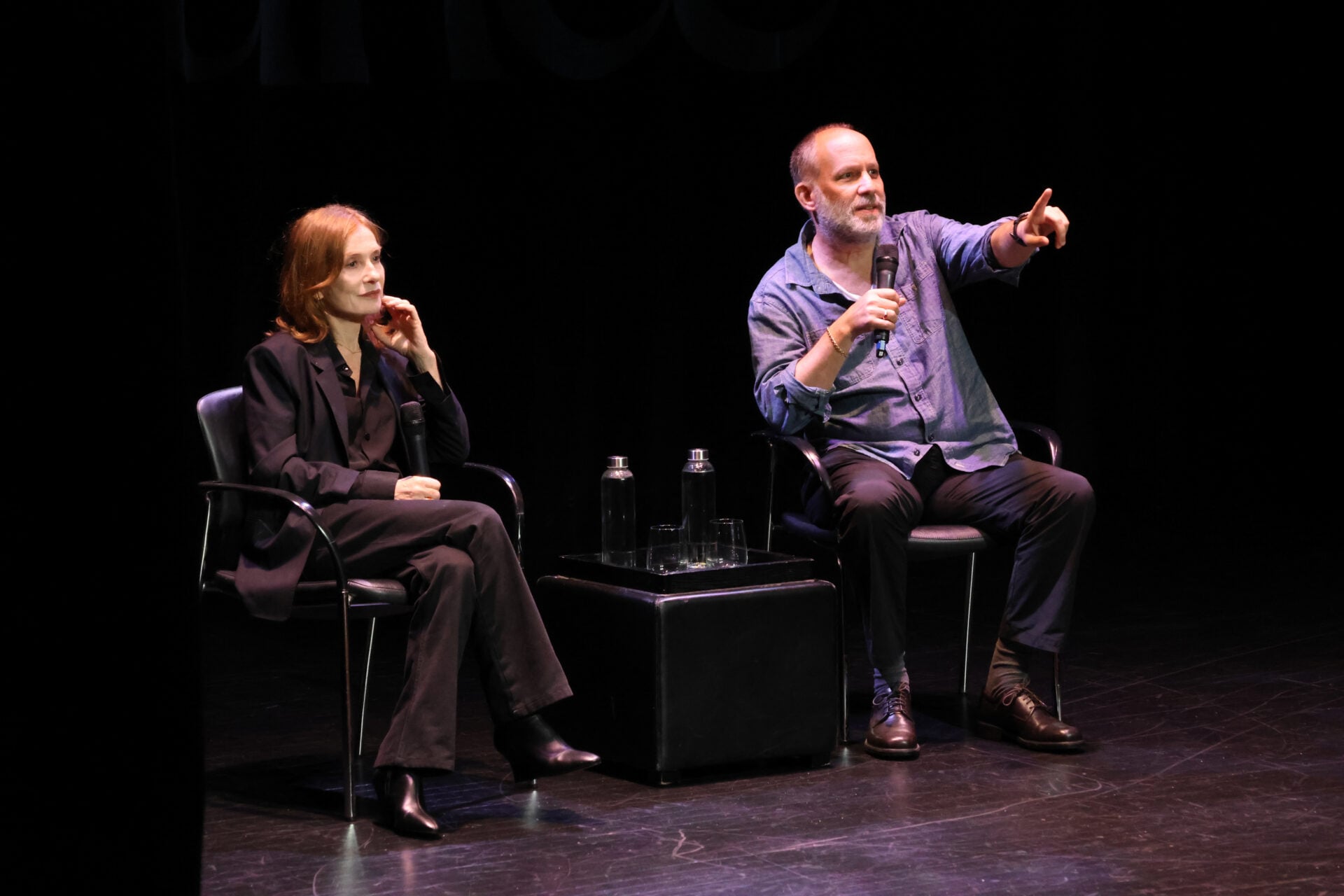
In 1975, Gorin immigrated to the United States where he completed three brilliant films, known as the ‘Southern California trilogy” that helped shape the documentary subgenre known as the essay film: Poto and Cabengo (1976), Routine Pleasures (1986), and My Crasy Life (1992). L’Alliance New York is honored to welcome Jean-Pierre Gorin for his long-awaited return to New York to present a special program of three of his films and three films he has selected which, as he did for several decades in his legendary classes, reintroduce and vindicate bygone treasures of French cinema.
Co-programmed by Yuka Murakami.
Jean-Pierre Gorin will also appear at the Roxy Cinema to present his films Routine Pleasures and My Crasy Life on June 3rd and e-flux Screening Room on June 6th for Poto and Cabengo.
Why? Because…
Notes on the series by Jean-Pierre Gorin:
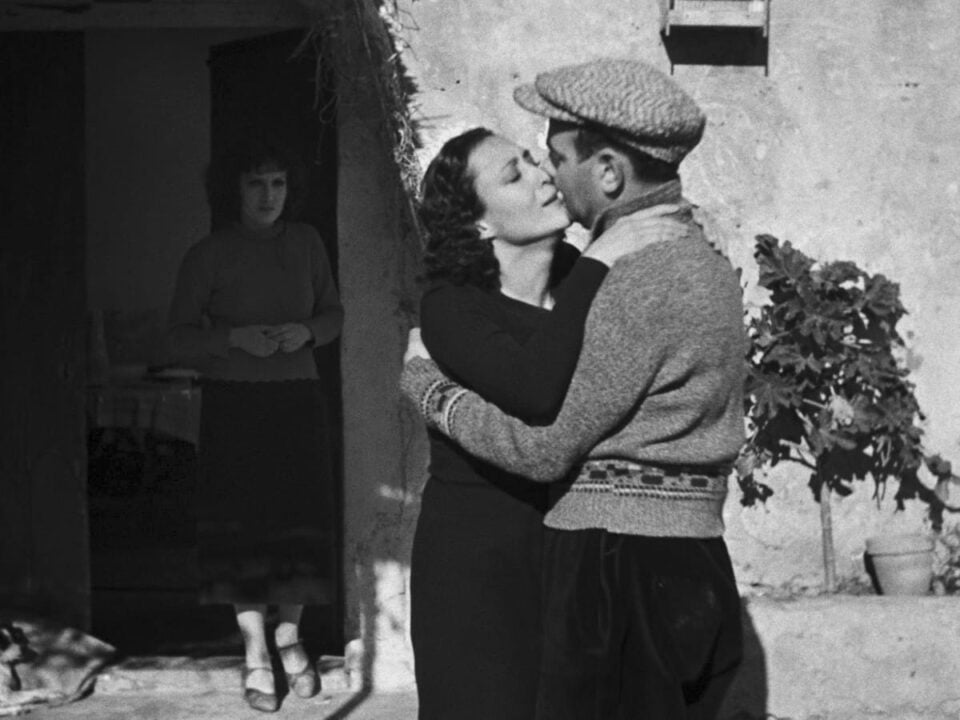
Toni, why?
- Because one who doesn’t think about the Thirties these days is a fool.
- Because as Sei Shōnagon and Chris Marker would say: “There is not a shot in this film that doesn’t quicken the heart.” Up tilt, down tilt, pan, tracking shot, framing, distance, the sensual panoply of cinema and Renoir’s ferocious need to keep the eye active…what can I say?
- Because Renoir is one of the very few filmmakers that makes you “smell” the image. Sauge, thyme, rosemary, lavender, pine, cypress, olive trees. If you don’t smell Provence during the show, rush to the emergency room.
- Because an ellipse is an ellipse is an ellipse. Renoir’s art of using them and the way he propels the narrative through the complexity of these “simple lives.”
- Because of Renoir’s use of music in the film, anchoring it in the nostalgic poetry of immigrant folk. Add to the musical interludes, the polyphony of languages, French, Italian, Spanish, the fluidity of the immigrant pathos.
- Because how steeped in the notion of class the film is. Where can one see it at work these days? Pedro Costa is the only name that comes immediately to mind.
- Because, because, because…if I am honest I long for the days a bee would play Cupid for me (you’ll understand what I mean when you see the film and, like me, you won’t ever forget it…).
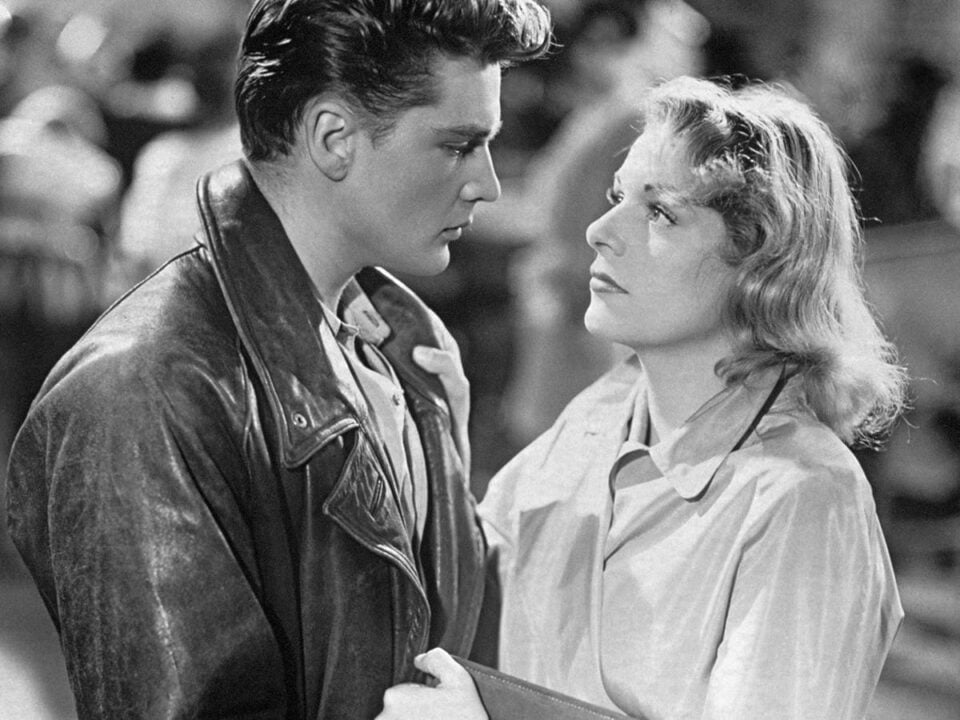
Lumière d’été, why?
- Because everybody knows how to spell Renoir, far fewer G.R.É.M.I.L.L.O.N. Repeat after me: G.R.É.M….
- Because of the thread that runs from Toni, Renoir, 1935 to Lumière d’été, Grémillon, 1943. Eight years that go from the collective hopes of the Popular Front to the bloody senility of Vichy and its complicity with Nazism.
- Because Lumière d’été is like an echo of another Renoir film, The Rules of the Game (1939). Both films share the honor to have been banned by Vichy censors.
- Because the script by Prévert and Laroche is a direct link to The Game of Love and Chance by Marivaux, the most French of all the XVIII century playwrights. The unexpectedness of love, its near impossibility to persist, the savage hurt of betrayal; in short, all the facets of desire explored.
- Because Lumière d’été offers this panoramic vision of the French society, from the aristocracy and its perversity to the working class and its salt of the earth messianism. Not to forget the artistic bohemians, lost between impotency and a double dose of any available alcohol. All clichés of course, but seen here at their most active and powerful
- Because it seems interesting to put in the spectators’ line of sight two visions of the landscape of Provence and trust them to decipher their difference.
- Because, again, remember G.R.É.M.I.L.L.O.N.
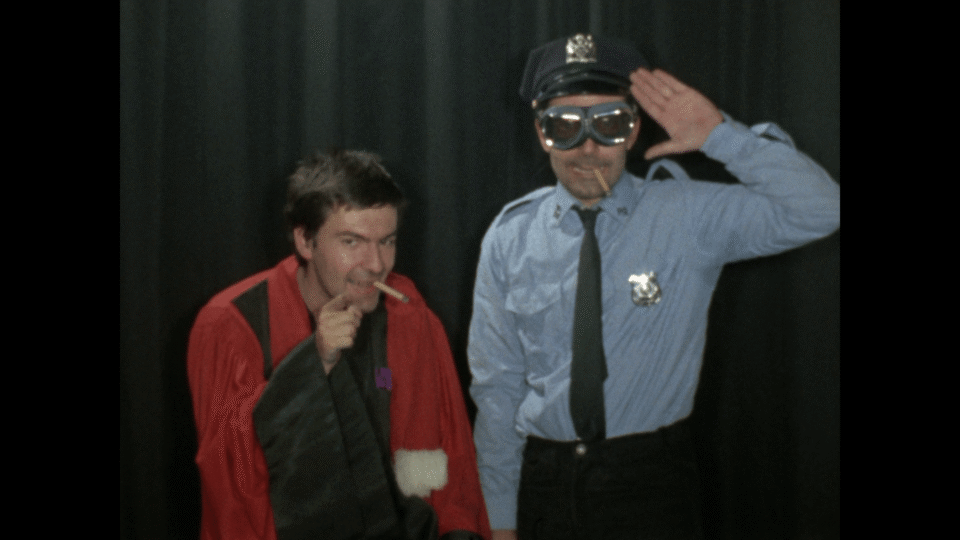
Vladimir and Rosa, why?
- Because the films of the DZIGA VERTOV GROUP were tagged as Sunday school Maoism and it is time to see them for what they truly were: DIY garage punk experiments.
- Because the through line of these films is a raging impiousness against the sacred cows of cinema in general and, more precisely, the lefty kind.
- Because we were persuaded (after careful consideration) that Laurel and Hardy were the only materialist dialecticians of cinema, and we had the temerity to venture on their path.
- Because we thought that a decent film is made as much of misses that it is made of hits. The principle was always to juggle as many balls as possible and to not forget to drop a few in the process.
- Because we thought that a lack of means was a way to invention, good or bad.
- Because we rejoiced in cooking up a little something out of the Chicago 8 Trial and infuriating the protagonists in the process. We did succeed beyond our hopes. I am sure that the ghosts of Abbie Hoffman and Jerry Rubin appreciate Aaron Sorkin’s Trial of the Chicago Seven more, but they are wrong: we were truly funnier.
- Because you should not forget that it’s the inalienable right of the spectators to fall asleep as long as they wake up before the credits.
Godard in America, alas.
- I tried to remind Jake Perlin that there was such a thing as the statute of limitation. He refused to hear my plea in the name of archeology.
- I’ll pay you not to watch this film.
Such a Pretty Little Beach, why?
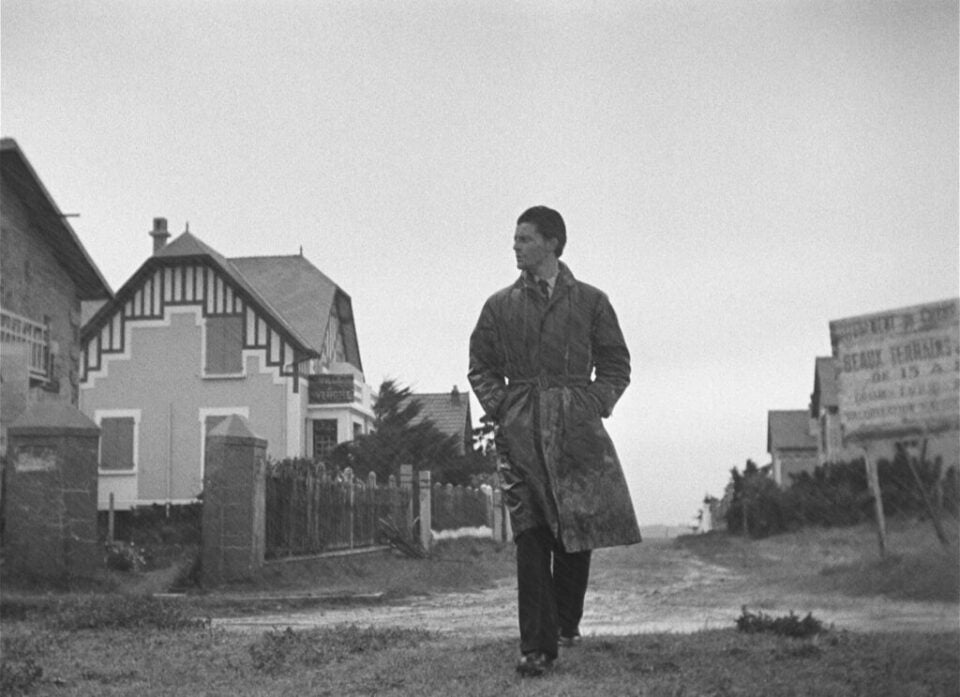
- Because this film has all the atmospheric trappings of a “noir” but in fact has very little to do with it. Out of expediency, critics like to pronounce “noir” every five words, but I beg to differ. This “pretty little beach” under an almost constant rain is bleak. Bleak is not “noir” by any means.
- Because it’s a film on the cusp, both anchored to the past and announcing the future. One sees it at work in the contrasting acting styles that make this film. In this hotel where the protagonist returns for the last act of his life, there is a lot of French hackneyed acting at work, a chattiness straight out of the declamatory style of the Thirties, but the protagonist himself is another beast altogether. Walled in silence is a figure in a landscape swept by the wind and pelted by the rain. It is as if the existentialism of Sartre and Pavese was finally reaching the screen. Gérard Philipe and his preternatural wounded beauty open a door through which generations of actors will pass.
- Because this film implies a reliance on landscape, the way it is framed and the distance at which it is framed. And because all the manipulations open up to a radically modern utilization of time. The film announces Antonioni and further downriver, Tarkovsky, and far further down yet, Béla Tarr. Long takes, mon beau souci! And if you are tired of my invocation of glorious ancestors, watch this film where really nothing or almost nothing happens and ask yourself how it manages to keep you captive. You might learn something without me having to pontificate.
- Because the camera work of Henry Alekan. He ended up working on nearly a hundred feature films and more than fifty documentaries and dramas for television. He is known (alas) mainly for Wenders’ Wings of Desire, but I would give all the wings and all the desires of all the angels for the simplicity and the uncomfortable texture of that bleak little beach. Besides, come on, what can beat black and white?
- Because I wanted to give you hope. There are thousands of little gems in the vaults of cinema one can discover.
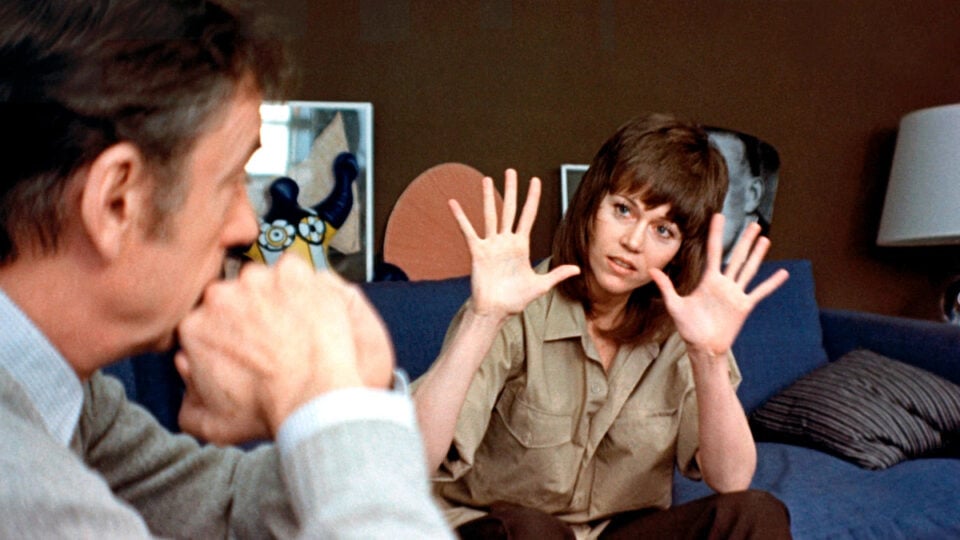
Tout va Bien or That’s All Folks!
Just a line here. There is plenty to say but believe you me or believe me you (whatever comes first), I am tired of penning these notes.
Because of the names Jane Fonda and Yves Montand the film was released in “normal theaters”. After years tinkering in the garage, we were out in the open.
I remember going to one of the theaters where the film was playing. As I arrived, a woman bolted, foaming at the mouth and demanding her ticket be reimbursed.
If she had only read the ads we had put in the papers for a good month before the release of the film, she would have spared herself the pain. We announced that the film would be a great deception. Deception in French means both disappointment and trickery. We were honest at least.
Contrary to this poor woman, I think the film has aged passably well.