Hail, Sarajevo
Je vous salue, Sarajevo
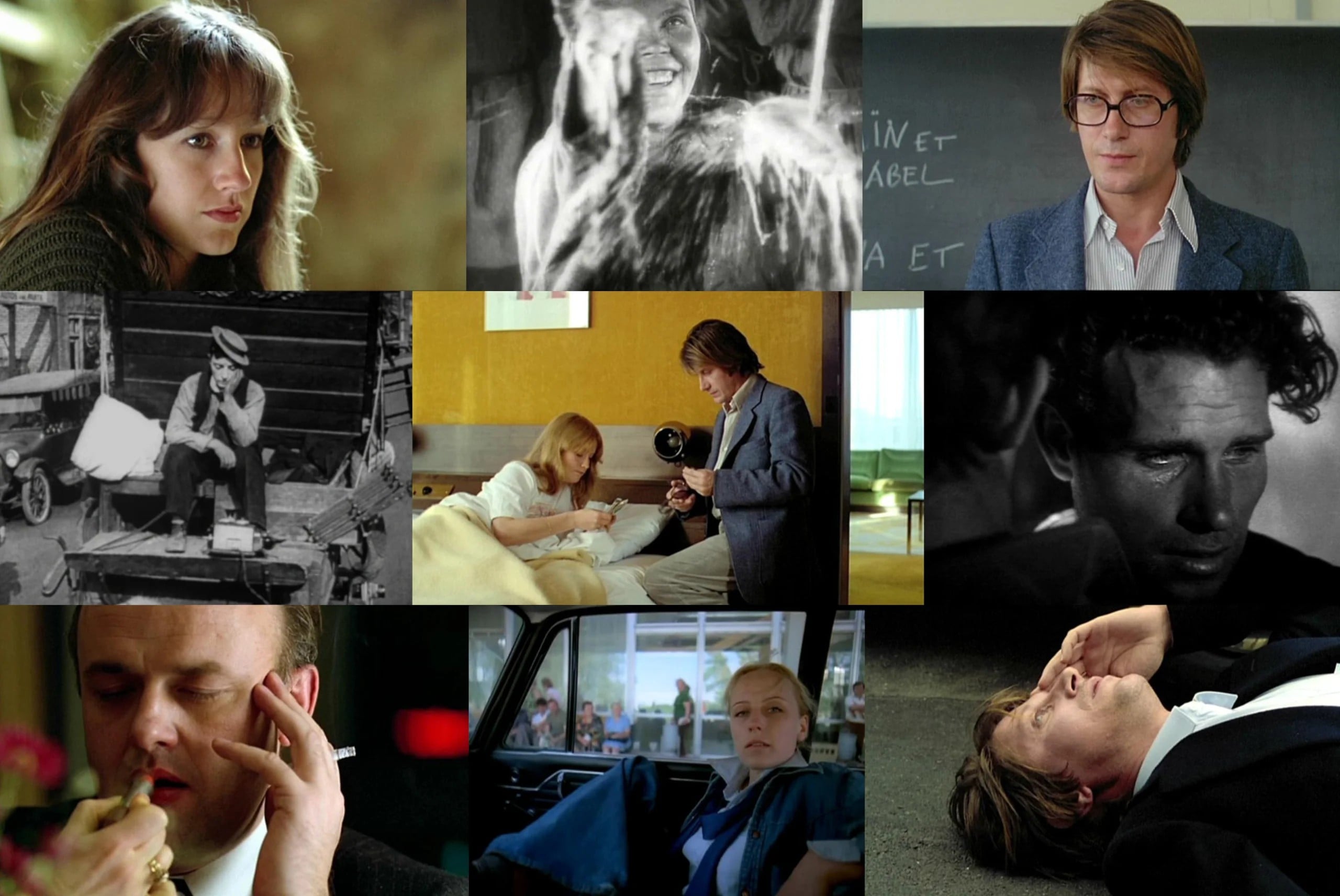
Dir. Jean-Luc Godard, 1993, 3 min, DCP.
with
The Silence of the Sea
Le Silence de la mer
Dir. Jean-Pierre Melville, 1949, 87 min, DCP.
In the late 1990s and 2000s, Jean-Luc Godard had a series of unrealized projects with Claude Lanzmann, Bernard-Henri Lévy and Marcel Ophuls relating to the Holocaust, Jewishness and Palestine–Israel, including a TV program in which he, Lanzmann and Lévy were to debate the ethics of representing the Holocaust on film. Although it ended acrimoniously, the project informed a series of subsequent Godardian initiatives, including a contemporary version of Vercors’ 1942 World War II novel Le Silence de la mer (The Silence of the Sea), which Jean-Pierre Melville had adapted as his first feature. In Godard’s planned film, which was to be called Le Silence de la terre (The Silence of the Earth), the action was to be transposed from occupied France to occupied Palestine. He envisaged replacing Vercors’ German army officer billeted in a French home with a cultivated Israeli officer, intellectually close to Hannah Arendt or Martin Buber, living in a house with its Palestinian owners.
Although he once again abandoned this project, it fed into a new collaborative venture with Ophuls about Palestine, Israel and what it means to be Jewish, Être Juif (Being Jewish). Set in an apartment in the occupied territories, the plan was that they would film one another and attempt to resolve the Palestine–Israel conflict between them, ‘as if we had all the powers’, as Godard put it. Although this project also failed to take off, both it and Le Silence de la terre informed his luminous 2004 Sarajevo-set feature film Notre musique (Our Music), which in its initial formulation was much more explicitly focused on Palestine and Israel.
This program also includes the stunning short film that Godard made in 1993 in protest at the refusal of European governments to take action over the siege of Sarajevo, Je vous salue, Sarajevo (Hail Sarajevo, 1993). —Michael Witt, Series Curator